| |
|
|
"XML and JSON are not relics of the past. They are foundations for the future of AI."
- Mark Gross, President, DCL |
|
|
|
NEWSLETTER | June 2026 STRUCTURING DATA AND CONTENT SINCE 1981
|
|
|
|
|
|
|
|
|
|
Taming AI: Using AI for Content Conversion at Scale |
AI promises to transform content conversion, but what does it actually look like when you’re processing thousands of documents a day? In this podcast from Scriptorium, Sarah O’Keefe, Founder and CEO of Scriptorium, and Rich Dominelli, Systems Architect at DCL, dig into the real-world challenges of using AI for large-scale structured content conversion. If you've wondered what content conversion actually looks like when processing thousands of documents a day, this conversation delivers the unvarnished truth, including the messy validation loop nobody discusses. |
|
|
|
|
|
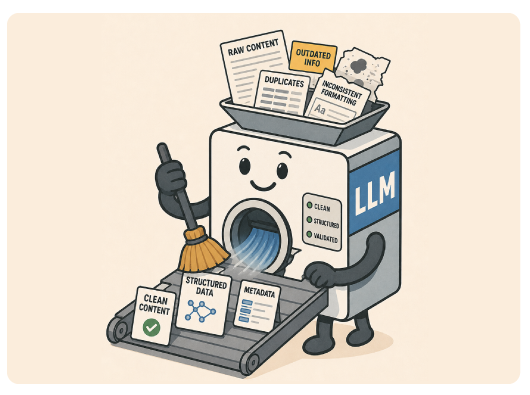
The Inconvenient Truth: Someone Has to Clean the Content |
A situation is unfolding inside AI initiatives at many organizations. Teams invest in AI models, platforms, and workflows and still get outputs they can't trust. The culprit isn't the AI model itself. Rather, it's the content going in. Because AI doesn't fail loudly. AI fails fluently, generating plausible-sounding outputs while quietly mangling your tables, misreading structure, and hallucinating over your gaps. Find out why messy content is the silent killer of your AI initiatives.
|
|
|
|
|
|
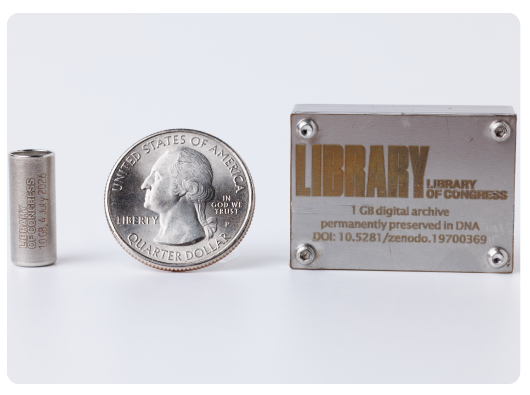
Synthetic DNA Storage Device Carrying Digitized Collections for The Library of Congress |
Tucked inside a metal vial no bigger than a pencil eraser, Thomas Jefferson's handwritten edits to the Declaration of Independence, an 1898 recording of "The Star-Spangled Banner," rare pre-Columbian manuscripts, and other historical items from the Library of Congress' digital archives are heading underground in Philadelphia this July for the America 250th anniversary celebrations. The content is encoded in synthetic DNA and sealed in a time capsule not to be opened until 2276. The Library of Congress is using one of the most durable storage technologies developed and the implications for how we think about preserving content (i.e., structured, meaningful, machine-readable content ) stretch far beyond a birthday celebration. |
|
|
|
|
|
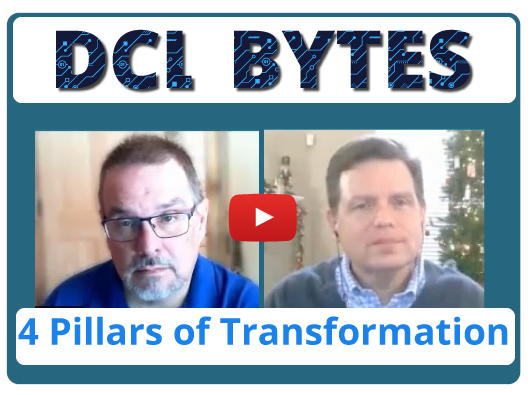
DCL Bytes: The Four Pillars of Transformation |
DCL Bytes is part of the DCL Learning Series and features short, informative clips on technology, structured content, and more. In this video short, David Turner and Rich Dominelli discuss DCL's "Four Pillars of Transformation." David and Rich pull the curtain back to look at the details that go into every interaction we have when approaching a conversion project and the critical step of normalizing content. |
|
|
|
|
|
|
|
|
|
|
|
DCL partners with many global organizations that complement our services and offer a complete workflow solution to our customers. Following are some recent highlights from DCL's Partnership Laboratory. |
|
|
|
Making Scholarly Content AI-Ready and More Valuable: Tokens, RAG, MCP — and Why Meaning Wins If you’ve heard terms like “tokens,” “vector database,” or “RAG” and thought, “I should probably know what that means and what it means for my organization,” this webinar is for you. Building on our article in The Scholarly Kitchen, we’ll explain how AI systems consume and retrieve information (in plain language), and why semantic enrichment (ontologies, relationships, hierarchies, and consistent terminology) of scholarly content helps AI deliver more accurate, trustworthy outputs. Learn how these building blocks connect, what “AI-ready” truly requires, and how publishers can strengthen strategic positioning by delivering meaning, not just raw text.
|
|
|
|
|
|
What Is RAG? Why Retrieval-Augmented Generation Matters for Your AI Projects
AI is now a part of how teams work every day. Many organizations now use copilots, chatbots, and internal assistants to help users find information, reduce manual searching, and manage growing documentation. These tools boost productivity, but they also bring a common problem. Sometimes, a general AI model sounds confident but gives information that does not match your product, terminology, or documentation. Retrieval-augmented generation, or RAG, helps fix this issue by making sure AI uses approved content. Rather than relying only on training data, the model pulls information from chosen sources to create its answers.
[READ MORE] |
|
|
|
|
|
Some of the Names Have Changed But DCL's Service Remains Consistent and Trustworthy
DCL's client list has certainly grown over the years, and this snapshot from October 2007 has many familiar faces we still speak with today. Many of these clients have changed names through mergers and acquisitions but DCL's services have remained consistent and trustworthy throughout. Have a look: are you on this list? [READ MORE] |
|
|
|
|
|
|
|
|
|
|
|
|